Showing posts with label environment. Show all posts

Sunday, August 20, 2017

Elbow Cay

July 28, 2017

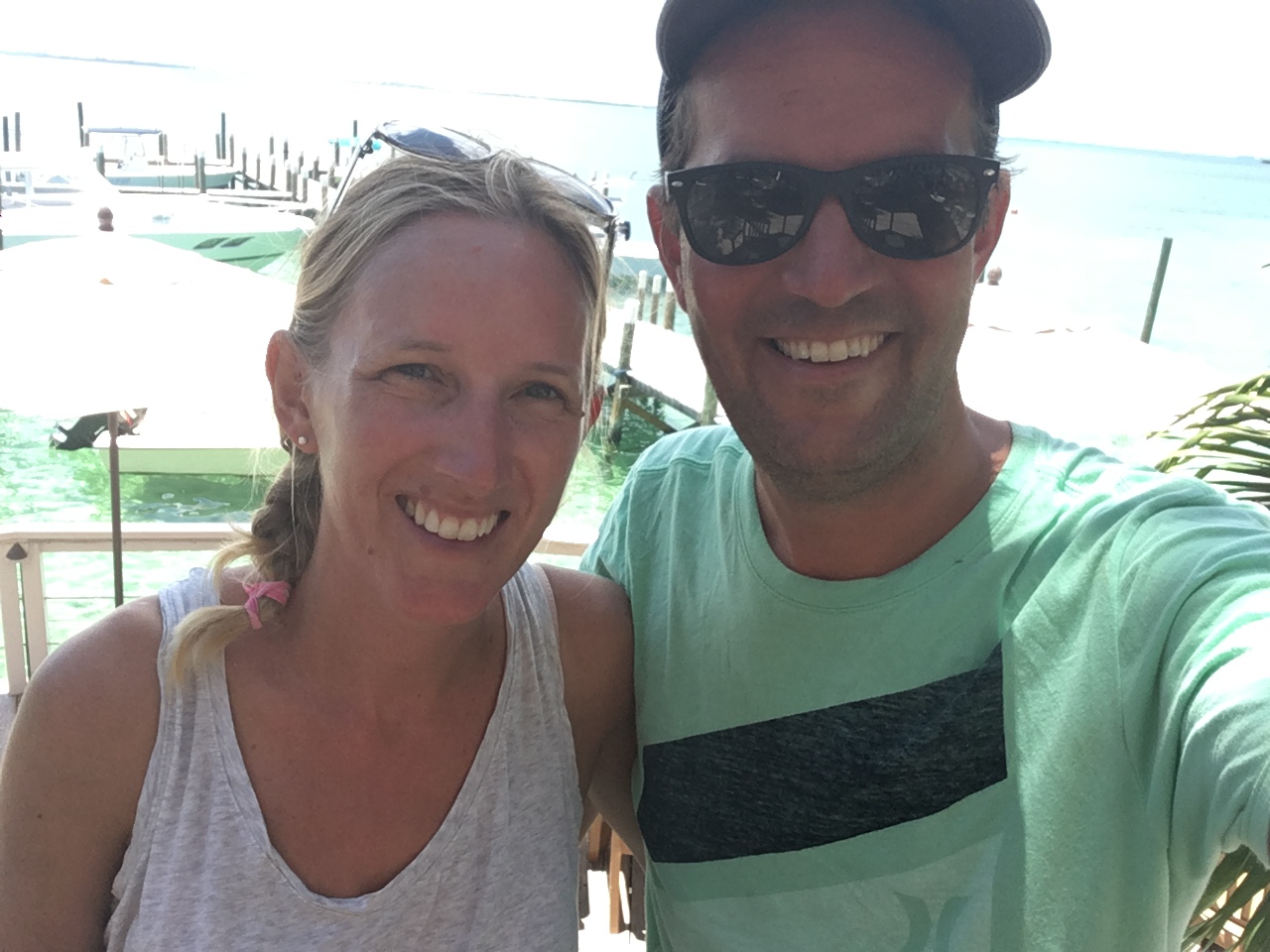
After a week in Hope Town, both at a mooring just outside the harbor and a few days at the fancy marina, we motored a few miles south to Tahiti Beach at the southern end of Elbow Cay. It's a spot that's similar to Double Breasted Cays with a sandbar that is dry at low tide, palm trees, and brilliant blue water; but much more accessible to vacationers with rental boats, so it was always crowded. Really crowded (10+ boats), not Bahamas crowded (which is anything more than two boats). In the heat of the afternoon there were usually ten boats with 5-10 people on each boat. Still, we stayed for three days because we had the place to ourselves except from 12-6. And the view from the back deck was just gorgeous.

We found a treehouse structure built from driftwood and scavenged line and even had a little driftwood swing. We climbed to the top of a rocky outcropping overlooking Tilloo Cut and placed our own sones on a cairn a la Moana. Hans went out the cut and fished the drop-off, at one point hooking a grouper that was so big it broke the fishing rod. The rod, not the line!! Talk about the one that got away! Our neighbors on the boat behind us stopped by for drinks one evening. Mark is a Bahamian and full-time cruiser/liveaboard. He gave Hans some local fishing tips and commiserated with us about the less than stellar visibility in the water. He believes it's from the large number of center console fishing boats that are constantly stirring up the water. It's easy to see that - the number of fancy boats with 2-3 outboards on the back is astounding.

painting her magic wand she found with Peter Rabbig

nice spot for a picnic lunch

our climbing champion


Looking out to Tilloo cut and the cairn where we placed our rocks


up at the top of the treehouse

I had stopped at the grocery store before we left Hope Town so we had a number of nice meals at home - giving us a good change of pace from our spaghetti, quesadillas, and jam sandwiches we'd been eating a lot of. We had a luxury lunch at Firefly Resort - fresh, local, and not deep-fried. We relaxed in the hammock in the shade and the girls swam off the swimming platform. The resort is beautiful - multi-level decking, stone walls that blended into the natural landscape, and brightly colored cottages built on a hillside - all overlooking the Sea of Abaco.
relaxed and happy at Firefly Resort


swimming platform that is underwater and high tide, dry at low tide


watching the sunset, and our neighbor for the night

We suspected bad water as the culprit for our GI problems so we added some bleach to our water tanks. Way too much and it tasted like we were drinking from the swimming pool. We were also out of milk so we weighed anchor and headed back to Hope Town to resupply and get fresh, non-bleach-y water.

Monday, August 14, 2017

Living the vacation life

July 18, 2017
Green Turtle Cay


No exercise; attached to land not water; a/c; comfort; restaurants. Fun. But different.

We pulled into Green Turtle Cay and tied up at Bluff House Marina. Our water tanks were empty, the fridge was near empty, and the lockers only had flour, pasta, and a couple cans of beans. After over a week in the out islands, it was time to re-enter civilization, at least for a day or two.

A day or two turned into three as we enjoyed the comforts of being at the marina. A/c, TV for the kids (=babysitter for the parents), restaurants, golf cart rental, water, water water (at .30 cents/gallon). Marina life in the Bahamas is easy living, at a price of course.

north end of Green Turtle


"Almost as fun as the fair!"

The golf cart rides were so much fun - and so different from our previous cruising life. We toured the whole island via golf cart which was fast, fun, and easy, as opposed to 10 years ago when we dinghies, hitchhiked, or relied on other cruisers' rental cars and generosity. We went to town and to the north end - the girls screaming and giggling the whole way. We stopped at the dump to show the girls what happens to trash, why we recycle, and we we try not to consume so much.


We ate out, a lot. Almost every meal. When we left Manjack we were down to huevos rancheros and jam sandwiches. We were ready for some variety! The restaurants at Green Turtle were very good, especially considering the limited food options and lack of foodie culture. We always opted for "fresh catch" and it was never overcooked. Conch fritters never disappoint, but also never live up to the ones we made at Walker's Cay.
Princess spotting in the settlement.
fresh conch salad

We restocked our lockers from the few small grocery stores in town; we found souvenirs at a little gift shop; we had a Goombay Smash at Miss Bee's - reputed to be the home of the original Goombay Smash. We played tourist and, after two weeks of living the barebones cruising lifestyle, it was fun.


attracting the nurse sharks at the marina.

After three days, I was ready to leave. Living the marina life, we found ourselves connected to land instead of water. When we wanted to go somewhere we hopped in the golf cart instead of the dinghy. If we were hot we swam in the pool or sat in the a/c instead of jumping off the side of the boat into the clear Bahamian waters. Life on the hook is filled with exercise - swimming, hiking, paddling, sweating. Very different from the easy marina life.

Day 1 of a GI bug that plagued me for the entire trip.
I fell asleep and Matilda took care of me while I was sleeping. Sweet girl.
TV TV TV!!

Tuesday, May 3, 2016

Fishing, waterways, boating, nature


I love the natural beauty of the coastal southeast. It's the main reason we wanted to move "down south" to the land of humidity, hurricanes, and cockroaches. Heat and violent storms and bugs - how very inspiring. Nope, it's not a forgiving environment in the summer months, and while we don't have to worry about frozen pipes or hypothermia, we basically have two choices: sit inside hugging the air conditioner or fan (or both) or full submersion in water - pool or beach variety. Outdoor activity is a literal hot, sweaty mess this time of year. But I'd rather sweat than freeze and we have enough months of phenomenal weather to make up for the four months of outdoor sauna.

We're just turning the corner into summer. Thunderstorms are popping up, cold fronts aren't in the weather pattern anymore, and I'm sweating more often than not. But the natural beauty is still here and we're finally getting the chance to enjoy it more. How? Longer beach days and Blue Seas.

I'm a huge beach bum and am beyond thrilled that our beach days are lasting much more than two hours this year. Last year we had a two hour limit before an inevitable meltdown, but the past two times I've taken the girls to the beach we've stayed for over five hours. Of course I can't bring my page-turner and cooler of beer like in the good old pre-kid days (I do have two small children to watch, after all), but I can relax in my beach chair, do some yoga, build sandcastles, and swim for hours. It's the perfect way to enjoy this coastline and to get the kids outdoors in nature with no complaints. We have our choice of beaches - from the developed Jax Beach with its pier and bars, to St. Augustine with a splash pad and playground, to Little Talbot Island which has a parking lot, showers, and sand dunes.

(yes, my friends, I made them pose for this picture. This is not natural!!)


Hans loves fishing, and, much to my initial disgruntlement, he bought a little 12' aluminum fishing boat for inshore waters. You may rightfully ask, do we really  need four boats? I asked the same question. Well, we may have a boat habit. Do we really need two cars? Do we really need that sundowner on a summer evening? Need want need want. I, too, was skeptical, until I went out fishing for a few hours. Just 30 minutes from downtown there is absolute stillness and tranquility in the marshes. Nothing to see but water, marsh, and sky. Nothing to hear but birds and the marsh grass rustling in the wind. And we saw dolphins. The little fishing boat, which our eldest quickly named Blue Seas, opened up a whole new part of the region for exploration. (Oh and my skepticism also dissipated after Hans caught his first fish. Yum!)

A redfish caught off the dock!


We've traveled up and down the east coast of the US via boat three times and this region has always been my favorite. I've spent the first almost two years of our time here being frustrated that I can't get out to the marsh lands and feeling disconnected from a life on the water. (Yes. I know. We live on our boat. My home is floating on the water. How in the world can I feel disconnected?!) But I was wanting and needing an active life on the water. I want to be doing stuff on the water, not simply floating on it.

swimming off the back deck of m/v Rhumb Line at anchor.


playing pirates...
"Cock a doodle doo, Peter Pan we need you!"


When people ask what we're doing these days my answer is pretty simple: pool, beach, boat.

Goofball Matilda pretending to be cold after a recent swim.

Saturday, November 15, 2014

Missing urban density

Urban density: the environment's secret friend

Cities: loud, dirty, polluting, asthma-producing concrete jungles with high urban density. But, at the same time, environmentally friendly? Yes.

Urban density in Spain.
I know there are studies and reports and articles written about the environmental benefits of high urban density, but it was hard for me to believe them when we lived in Philadelphia.

One of our favorite park in Philadelphia; directly under the Ben Franklin Bridge.
 We lived right next to loud, dirty I-95 and practically underneath the Ben Franklin Bridge, a major bridge connecting Pennsylvania and New Jersey. Our favorite parks were either under that bridge or at the interchange between I-95 and the bridge. It was loud and the amount of fine particulate that coated our boat and car made me worry about the quality of the air my girls were filling their lungs with. Moving to a smaller city seemed like a great way to live closer to nature with cleaner air, a slower pace of life, and a little more peace and quiet.

A quieter, cleaner life, but not necessarily and eco-life

And here we are. We moved from a city of over 5 million to a metro area of a little less than 850,000. It's practically a small town compared to the Philly metro area. Have I found what I was looking for?
  • Clean air. Yes. The boat and car stay relatively clean and my lungs don't burn when I exercise outside. (Okay, well they do burn but that has nothing to do with air quality.)
  • Peace and quiet. Yes and no. It is quiet walking around the neighborhood. We can hear the birds. There is no background hum of the highway. But we are close to a Naval Air Station and the planes run a lot of exercises directly overhead. We are also a stone's throw from the major railroad track that runs down the east coast of Florida. The trains are insanely loud. (Not the actual clickety-clack but the horns they blow as they go through intersections. And the horns have to be loud because the intersections are outdated, making the trains blow the horns as a precaution to warn drivers. But I digress...)
  • Close to nature. Yes. We are close to nature. The river is quiet and big and actually feels like a living body of water as opposed to the Delaware River which always felt like a large dumping ground for farms and industry and energy plants. We're even considering getting a stand up paddleboard so we can play on the river. (You know, in all our free time.) We are a short 30 minute drive to the beach and the city has lots of parks that are bigger than your average city park.
  • A beautiful beach, a short car ride away.
  • Slower pace of life. Yes. Rather, YES. It is slow here. Compared to a city of 5 million, there is not much going on. I'm not sure why I didn't fully expect that.
Clean air, peace and quiet, close to nature, slower pace of life. These all seem like they could go hand in hand with an eco-friendly way of life. But there is one key element missing: high urban density. This is a city built around cars. The sprawl is mammoth and it can take 30 minutes to drive from one end of the city to the other, on a highway, going 70 miles an hour. It is hard to wrap my head around how BIG this city is. People drive everywhere, the public transportation is sub-par, and it is not at all bicycle friendly.

So, yes, big cities are dirty and loud, but I'll venture a guess that the residents of a big city with high urban density are polluting (define as you like) less per capita than residents of a smaller city with big sprawl. 

Embracing the small

What do I miss about the big city? I miss impromptu conversations with random strangers as I walk down the street. I miss being able to walk to independent coffee shops. I miss being able to walk to friends' houses. I miss the color and the noise and the action.

The annual Mummers' parade on January 1 in Philly.
The Headhouse farmer's market in Philly. Local, organic produce every weekend.
Oh SEPTA. I didn't think I'd miss you so much.

So what do I love about my new city? I love the quiet. I love hearing the birds. I love living on a river that has boating possibilities from day trips to week-long trips. I love walking down tree-lined streets. I love all the parks. I love being able to go to the beach. Oh, and there are palm trees.

Palm trees, clean air, and a gorgeous sunset with wide open sky.

Wednesday, November 5, 2014

(Almost) carless in a car-centric city

We have one car. Two adults, two kids, one car. Statistically speaking, the car-people ratio in our family is not normal for a family living in America. Per capita vehicle ownership in the US is 809 cars per 1000 people; that number drops slightly in Florida with 710 cars per 1000 people.

It's easy to live without a car in big, densely populated cities with great public transportation. It's nearly impossible out in the rural hinterland. And all those medium-sized cities? The ease of being car-less falls somewhere in between easy and impossible. Choosing to be car-less in the US definitely requires some lifestyle compromises and intentional thought about where to live.

I  call my life "car-minimal." We're not car-less, but since Hans takes the car to work every day, and he works between 60-80 hours a week, I'm arguably more car-less than not. On his days off we have the luxury of jumping in the car and going to the beach or to the main library or Trader Joe's. So I'm straddling both worlds: car-less and speeding down Route 66. So, how do I get around with two little kids in tow on my car-less days? What are the important factors in living a car-minimal life?

Location, location, location
Choose your neighborhood and choose wisely. Decide your walking or biking or public transit distance and draw a radius around your house or apartment. What can you reach without a car?

Our marina is within spitting distance of the grocery store, a marine supply store, a Starbucks, a bagel shop, a couple banks, hair salons, a fantastic park, a pizza restaurant, and a sushi restaurant. We're a little further afield, but still bike-able or public transit-able to a library, some friends, other parks, cafes, etc.

Learn your local public transportation system
It may not be frequent, it may not go exactly where you want to go, but, in general, public transportation works. It's not scary, the people on it are not scary, it's usually clean, it's safe, and it's cheap.

I am a big fan of city buses. I love taking the bus. I know my closest bus route and I also know that it is generally on time (never early but sometimes late) and the buses are not frequent. So I have to know the schedule and I can't miss a bus if I have somewhere to be. Yes, it does take longer to get somewhere on the bus. Yes, on days when I have the car, I always choose to drive over going on the bus, but public transit is invaluable to me on my car-less days.

Find other ways to get around besides walking
If you want to live a car-minimal life, you've got to think outside of the box. I tow my girls around in a bike trailer. I take the bus. I like to walk. I compromise on what I want to do and when I can do it.


Why? 
$$$. The number one reason we only have one car isn't aligned with higher morals or strident environmentalism. We only have one car because we only have one car. We moved from a big city in the northeast to a medium-sized city in the southeast. Having one car in the northeast was a luxury; having a car here isn't a necessity, per se, but it definitely makes life easier. A second car would be great, but we just don't have the cash to buy one and we're not willing to budget any money for a monthly car payment.

I also like the challenge of living outside of the car culture. I wish our cities were designed to be more bike and pedestrian friendly. I wish more people biked and walked and took public transit. I like getting to know my neighborhood because I spend a lot of time here, rather than trekking all over the city and suburbs to go to a new playground. By not having a second car, I actively support my ideals of community, environmentalism, and health.

The pitfalls
Of course there are many, many times when I wish we had a second car. The city is geographically big and I have friends that I can't visit because they live just too far away to bike or bus to. The main library has great kid programming, but it's a little beyond our biking radius. I don't mind a longer bike ride but it's hard to convince two sisters to sit happily together in a bike trailer for more than 15 minutes without fighting. And of course if it's raining out then we're stuck at home.

So, yes, if someone were to give me a car, I'd happily take it. But I know that I'd still limit my usage and I would still travel via bike or foot if I was going less than three miles. Just because we live in a car-centric culture, doesn't mean we need to travel via car every single time we leave home.

Yesterday, as we were getting off the boat to head to the park, my pre-schooler asked me if we were taking the car or bike or walking. I responded, bike and she groaned. Apparently she really wanted to go in the car. I explained, in 3-year-old speak that cars drink gas, but they don't drink all the gas. Some of the extra gas gets blown out into the air and makes the air dirty. Our bike doesn't drink gas, so if we travel by bike instead of in the car, we won't make the air dirty.

Simple, irrefutable pre-school level logic.


Friday, August 15, 2014

Choosing a life afloat


Why do I liveaboard? Why do I choose to live on a boat that is 36’ long and 14’ wide with my husband and two small children? 

I can easily tell you why someone wouldn’t want to choose this life. The lack of space, lack of privacy, lack of a yard or garden, lack of appliances, lack of lack of lack of.

It's pretty small. Main cabin (living room) looking forward.

Galley.

Yes, our floating home is lacking a lot of comforts and stuff that has become standard in the modern world. But we make up for it ten-fold with the things we have that we wouldn’t necessarily get if we lived on land.

Economies. Economy of scale and and fiscal economy.

Our space is small so we only have exactly what we need. 

Shoes and clothes
I have a few pairs of shoes, each of which matches a number of different outfits and occasions. I wear my shoes until they wear out and then I carefully consider the replacement pair. The same goes for clothes. I rummage through the racks at thrift stores for higher quality brands in similar styles and complementary colors so I can mix and match. 

The galley (kitchen)
We have four pots and pans: a 9” cast iron skillet with high sides, a 9” cast iron pancake pan (pankakor pan), a 3 quart stainless steel pot, and a very small 1 quart pot. Plus a tea kettle. We have one wooden spoon, one spatula, one whisk, one cutting board, etc. The exception: we have quite a number of knives on a wall-mounted magnetic rack, because you can’t cook without good knives.

And it is possible to make amazing birthday cakes, like Freja's pankakor torte for her 3rd birthday.

Linens
We have one sheet set for the vee-berth bunks, one cotton and one flannel sheet set for our bed, one towel per person, a few hand towels, and many, many washcloths (to wipe little faces after meals).

I’ll stop inventorying our boat otherwise I’ll be tempted to stop writing and start filling some bags to bring to Goodwill. Of course I do have to mention the absolute lack of stuff  needed to raise kids on board. And this can only be considered a good thing. No crib. No big high chair. No changing table/dresser combo. And the lack of toys. Oh joy, the lack of toys!

Freja finding a cozy spot next to her tiny kitchen we found in Sweden.

And the kitchen strainer is always a fun toy.

No big bathtub but two tubs that can be brought out to play in on the back deck.

Matilda, summer 2014.
Wearing the exact same clothes and hat Freja was wearing during summer 2012.
Reduce, reuse, recycle.
My point is that we have exactly what we need and we aren’t trapped in the endless cycle of consumerism and waste. It is nice to buy shiny new things at the store, but, in the long run, shopping isn’t fulfilling and doesn’t make me happy in the same way as spending a day at the beach or eating a nice dinner does. 

Economy of scale directly translates to fiscal economy. It’s cheap to live on a boat. Not only do we not spend money on stuff, marina fees are much much lower than rent and things like parking, internet, laundry, trash, water, and a community pool are included in our monthly slip fee. We’ll gradually pay off our student loans and gradually work our way back to the kind of economic freedom we enjoyed when we were cruising in the Caribbean. 

In the meantime, a liveaboard life isn’t a static one. Even if we are living at the same marina for years, just by virtue of living on a floating home that has the ability to take us places (say from Philadelphia to Jacksonville!), we live with the possibility of the dream. Open horizons. Adventure. Sure, we’re not going anywhere anytime soon. We’re tied up with work and the care of two small children, but at least we can sit on our back deck with cold beers and dream about going somewhere, knowing that the dream can be a reality. We can chat with active cruisers and live vicariously through them. The proximity to the dream makes it seem more real.

dreaming of this ...

and this ...

and this.

This...

and this.


A boater’s proximity to nature is another compelling reason that keeps me living aboard. I know when it’s raining, I know when the temperature changes a couple degrees, I know when the sun rises and sets. I’m conscious of how much plastic and packaging I bring aboard and how much trash I make, because I have to bring it all off again. We wear clothes multiple times before washing because we have to haul everything up to the marina laundry. Alternatively, I do tons of small loads in our mini onboard washing machine. So the choice is daily laundry or hauling heavy bags to and fro. It’s easy to wear clothes 2, 3, or 4 times before washing. I use eco-friendly cleaners like vinegar because all of our gray water goes overboard. One-ply toilet paper because our septic system is sensitive. What am I lacking? Compost. Oh don’t get me wrong, I make a lot of compost, but sadly it all goes in the trash because I don’t have the space nor need for a compost bin.*

Hello beautiful sunset, Philadelphia, summer 2013.

And hello intense storm, near Savannah Georgia, summer 2014.

Of course, the main reason that I liveaboard is happenstance. We first moved aboard with the goal of cruising the Caribbean. We did that and when we moved back to the States we just never moved back onto land. This boat is my home. Why go anywhere else? I can wax poetic about the sunrises and the wildlife and the simple life, all of which make living aboard pleasant, but, the bottom line, when I’m on my boat, I’m home. I’m comfortable, I’m happy, I’m safe. I have what I need and what I want. (Again, see*.) Why live anywhere else?

Yet, yet … the majority of the world lives on land, so what kind of person has chosen this floating life? If you want to meet an oddball or two take a walk down the nearest dock. Liveaboards tend to be an eccentric breed. Liveaboards fit in all different boxes: young people, hippies, retirees, early retirees, families, religious missionaries, tax evaders, bachelors, part-time cruisers. You name it and you’ll probably find it. 

I think I’m a pretty run-of-the-mill, upper-middle class white American. What is it about my personality that makes me a successful liveaboard? I’m pretty low maintenance. Makeup? Eh. Clothes? Eh. Shoes? Eh. Fancy electronics? Eh. I love the internet but I see the value in unplugging. I’m a bit of a DIY-er, though I hate to do blue jobs. I get tremendous satisfaction from the self-sufficiency that living aboard demands. I like the simple life, but I also like to eat out. I like being on my own floating island, but I also need a large circle of friends and daily social interaction.

There is no specific personality that guarantees a successful liveboard, just a willingness to be different, learn, live with less, live simply, be open, and, perhaps most importantly, not be prone to seasickness.

*I wish I had the need for a compost bin. I love so many things about my life aboard; I’ve learned to live with so many idiosyncrasies about life aboard; I don’t sit around pining for such-and-such landlubbing amenity. Except a garden. I would LOVE to have a yard and a garden. Yes, I have seriously considered finding some undeveloped waterfront land where we can park the boat and grow veggies.