Showing posts with label liveaboard. Show all posts

Monday, September 18, 2017

Landlubbing v. boat life


writing outside while the kids play inside. Oh the space!

We’ve been landlubbers now for one month; one month as landlubbers after 11 years as  liveaboards. Time for a few reflections on the transition. Which do I like better? Boat life or land life? Which is easier? There isn’t an obvious answer, just lots of pros and cons, and a lot of the pros lead to cons.

In general, I’m enjoying the luxury and ease of living in a condo - the unlimited water and electricity, the space, the air conditioning. But we’re missing the boat too. The girls were very excited to move into a house, but they’ve also said goodbye to the only home they’ve had and they’re finding that they missing it, especially Freja. Maybe it’s a case of the grass is always greener but they’re (literally) dreaming about the boat and miss specific aspects. I feel it too. The change is easy, but I also loved our life on m/v Rhumb Line, and I’m missing it.

Yet, the house. It’s so easy. Here’s my current list of pros and cons of living in a house, in no particular order.

Pro: the space. This is the obvious one. There is so much space, and the sheer amount of space is amazing! I can hide from the kids and they don’t find me until they’ve found another activity to do. (Yes, I hide from my kids. All parents will get this.) We have a third bedroom which we call Hans’s work bedroom. All his scrubs are in there and he sleeps there when he’s working nights or other weird shifts. He can sleep undisturbed and I no longer have to shush the kids (Quiet! Pappa’s sleeping!).

There is an expression that used to run through my head on the boat, everything has a place and everything in its place. I was never good at this, especially because if we had one extra magazine out or if Hans left his shoes out, the magazine would be in the way of an art activity and we’d trip over the shoes. We had no extra space. It always looked like a tornado had just blown through and I was constantly purging and making runs to Goodwill with stuff to get rid of. Now I can shove the mail and the papers in an out of the way corner and no one notices. We have empty drawers and cupboards. I want to keep them empty; it’s the key (I think) to keeping a place tidy. Wow, it’s nice to live in a tidy place.

I have so much space to store food and cook, even though we have a relatively small kitchen compared to other houses. I’ve got my sourdough starter going, I’ve made baguettes, I’m trying out new recipes, I’m making yogurt. It is awesome to have so much space to cook.

Pro: the toilets. Boat toilets are stinky, they break, the flushing mechanism (a macerator pump) is loud, you have to find a place to pump-out the holding tank which contains all your, ahem, solid waste. There’s basically nothing good about a boat toilet, except, maybe, that it’s one step better than a bucket. But I’m not entirely convinced on that front. Diapers ain’t got nothing on a boat toilet. House toilets, on the other hand...big, clean, with a quiet, simple flush, relatively trouble free.

Pro: the fridge. I love the fridge in our condo. It is HUGE! It’s cold, the freezer makes ice and keeps ice cream frozen...it works! I hate the fridge on our boat. We bought it brand new in 2014, but boat fridges, at least this one, isn’t designed for daily use by a family of four. We overworked that poor thing. The constant opening and closing and filling and emptying it of food every third day made it work harder than it was designed for. The freezer constantly  needed defrosting and dairy went bad within one week. Plus it was small. I only could cook enough for one meal because we didn’t have room for leftovers. Thus, Hans ate a lot of meals at the hospital cafeteria when he could have been bringing leftovers. 

Pro: insulation. It’s really nice to live in a condo that is well-insulated and climate controlled. Our boat is like a greenhouse - which is great in the winter in Philadelphia and equally not-great in the summers. Older boats just weren’t designed for full-time liveaboards and they weren’t properly insulated. We added insulation, but we still found that we had to run the a/c and heat a lot (all the time).

Con: climate control. While it’s great to live in a place that is well-insulated and is 74 degrees at the touch of a button, I feel so disconnected from the natural world. I have no idea what phase the moon is in; no idea when high tide is; sunrise? Sunset? Is it raining out? I used to spend the majority of my waking time outdoors or at least with all the windows open and a breeze blowing through. Now I’m enjoying the ease of living in climate control, but I feel like I’m indoors all the time and I feel very removed from nature. 

Con: space. A lot of space means a lot of cleaning. We have three bathrooms. Three! That means three toilets to clean. All the space and rooms means a lot of square footage which means a lot of floors. There is a vast expanse of floors - all of which need to be swept and mopped. The space is great, but it’s not free. Much to their dismay, the kids now have chores they have to complete three times a week. (Except they do love vacuuming!)

Con: lack of community. I’m a big talker. I’m sure I’m one of those marina neighbors who people see coming and they quickly duck back into their boats. I try to reign it in when I see someone actively involved in a boat project, but, otherwise, sorry in advance and sorry retroactively, I talk a lot. I LOVE the boating community. Because I always have someone to talk to. Because I always have someone to lend a hand. Because I know we’re all looking out for each other. And, generally, most boaters are pretty chill people. At least when they’re at the marina or swinging at anchor, just hanging out on their boat. It is a fun environment. People really do listen to Jimmy Buffet, a lot. My kids have surrogate aunts and uncles in Philadelphia and Jacksonville - people who have known them and cared for them as babies and watched them grow into kids. 

I prepared myself when we moved off the boat that I’d be moving to an island. (Literally and figuratively.) I don’t know any of my neighbors. Not because I haven’t tried, but because it’s actually hard to meet them. People drive up to their garages, enter, and disappear. There are some common outdoor spaces, but they’re not frequented. Or if we do meet people, they’re here on a short-term rental. And now the pool is closed because the pH is off from Hurricane Harvey. So I’m finding my own community in other places, but it’s hard not to have that built-in community I so valued at the marinas and in the cruising community.

So which is better, boat life or land life? When I look over my pro and con list, it is clearly not black and white. A pro begets a con and I start missing the boat life again. Then I remember the toilets and...yeah I’m happy on land. On the other hand, not all things are equal. I’ll happily trade in some sweaty evenings without a/c for watching the full moon rise over water. I’ll happily trade in schlepping my laundry to a marina or laundromat for the conversation I have with other boaters while I’m doing that laundry.

After taking a minute to think about the differences between boat life and land life, I recognize two aspects of boat life that are vital to my happiness: nature and community. I get both of those on a boat, yet I have to work for those on land. 

I know that we’ll be back on a boat at some point in the future. The world is too big, there is too much to explore, I love sailing and boating too much to not get back out there. But I know when we do go again, while I won’t be trying to replicate land life on a sailboat, I will have a decent fridge and freezer and the toilet will smell like fresh flowers!

The trump card: high speed internet. Landlubbing means high speed internet ALL THE TIME. Boat living v. landlubbing can basically be boiled down to: nature and community v. internet. Will internet win in the end?!

Sunday, August 20, 2017

Elbow Cay

July 28, 2017

After a week in Hope Town, both at a mooring just outside the harbor and a few days at the fancy marina, we motored a few miles south to Tahiti Beach at the southern end of Elbow Cay. It's a spot that's similar to Double Breasted Cays with a sandbar that is dry at low tide, palm trees, and brilliant blue water; but much more accessible to vacationers with rental boats, so it was always crowded. Really crowded (10+ boats), not Bahamas crowded (which is anything more than two boats). In the heat of the afternoon there were usually ten boats with 5-10 people on each boat. Still, we stayed for three days because we had the place to ourselves except from 12-6. And the view from the back deck was just gorgeous.

We found a treehouse structure built from driftwood and scavenged line and even had a little driftwood swing. We climbed to the top of a rocky outcropping overlooking Tilloo Cut and placed our own sones on a cairn a la Moana. Hans went out the cut and fished the drop-off, at one point hooking a grouper that was so big it broke the fishing rod. The rod, not the line!! Talk about the one that got away! Our neighbors on the boat behind us stopped by for drinks one evening. Mark is a Bahamian and full-time cruiser/liveaboard. He gave Hans some local fishing tips and commiserated with us about the less than stellar visibility in the water. He believes it's from the large number of center console fishing boats that are constantly stirring up the water. It's easy to see that - the number of fancy boats with 2-3 outboards on the back is astounding.

painting her magic wand she found with Peter Rabbig

nice spot for a picnic lunch

our climbing champion


Looking out to Tilloo cut and the cairn where we placed our rocks


up at the top of the treehouse

I had stopped at the grocery store before we left Hope Town so we had a number of nice meals at home - giving us a good change of pace from our spaghetti, quesadillas, and jam sandwiches we'd been eating a lot of. We had a luxury lunch at Firefly Resort - fresh, local, and not deep-fried. We relaxed in the hammock in the shade and the girls swam off the swimming platform. The resort is beautiful - multi-level decking, stone walls that blended into the natural landscape, and brightly colored cottages built on a hillside - all overlooking the Sea of Abaco.
relaxed and happy at Firefly Resort


swimming platform that is underwater and high tide, dry at low tide


watching the sunset, and our neighbor for the night

We suspected bad water as the culprit for our GI problems so we added some bleach to our water tanks. Way too much and it tasted like we were drinking from the swimming pool. We were also out of milk so we weighed anchor and headed back to Hope Town to resupply and get fresh, non-bleach-y water.

Thursday, August 17, 2017

Hope Town


July 22, 2017


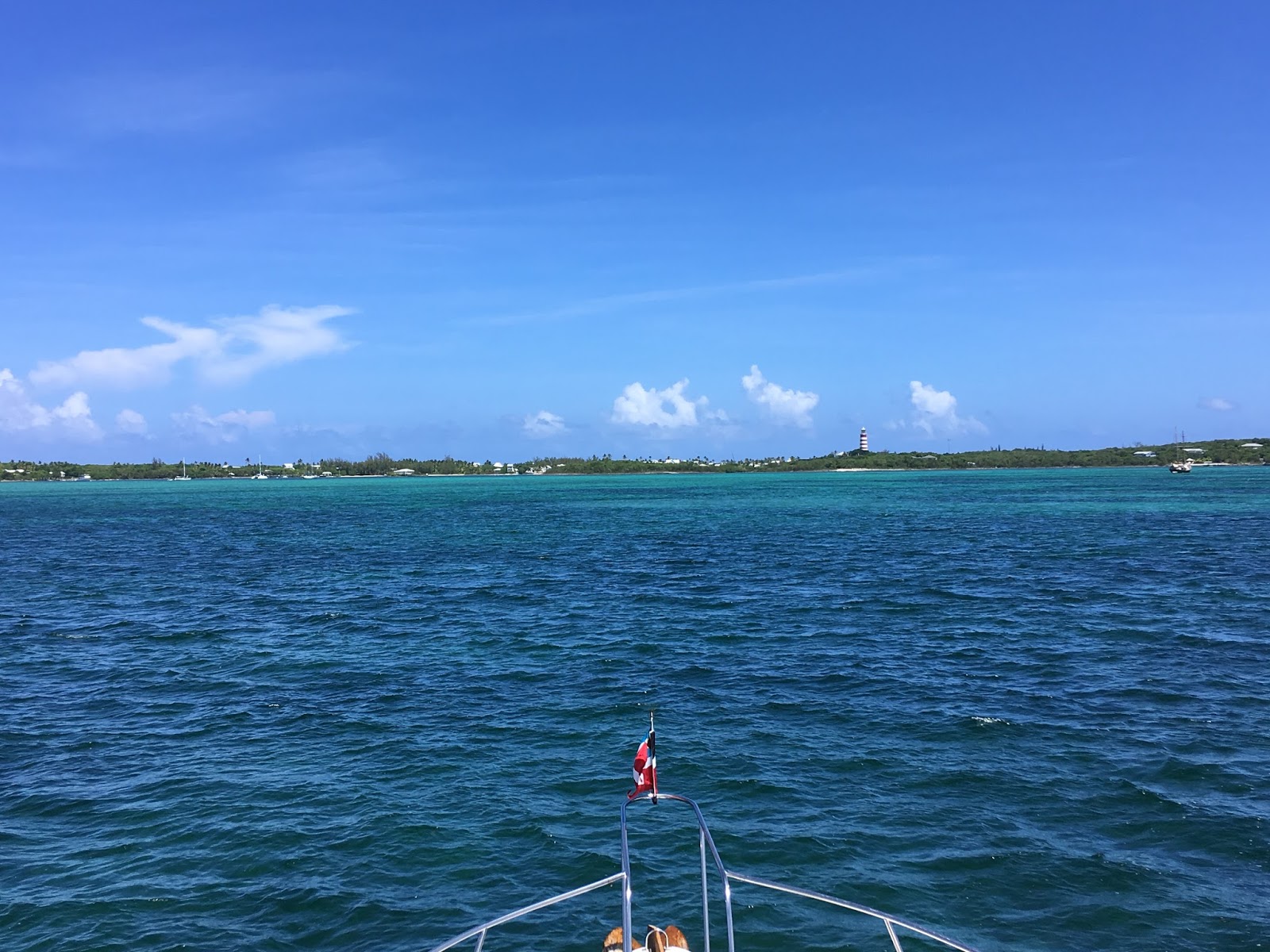
Spotting the iconic red and white striped lighthouse in the Hope Town harbor was a huge milestone. We'd done it! We left Jacksonville on an old boat that we'd maintained as best as possible with our medical school and residency and stay-at-home-mom incomes. [Read: debt, stipend, no income.] Some systems were brand new (solar panel), some were new five years ago (fridge, a/c), and some we'd just plain neglected (batteries). We left with the goal of reaching Hope Town - a picturesque harbor, Bahamian settlement, with amazing beaches and great snorkeling; and also a highlight of our trip on Whisper since we met lifeline friends there. So when we saw that lighthouse we cheered, high-fives, and felt a huge sense of achievement. Good job Rhumb Line! Who thought that our old Carver would have made it from Philadelphia to Hope Town, all the while providing us with a safe, cozy  home where we raised our girls for the early years of their lives. The jubilation was paired equally with a sense of relief. We'd made it to a well-developed part of the Bahamas and we're stranded on an out island or on the middle of the Banks or in the middle of the Gulf Stream. 

Hope Town has everything a boater could want: a protected anchorage lined with restaurants, marinas, and a small grocery store. A library, a playground (fantastic!), a sailing club, and it's only a few steps from the gorgeous, palm-lined, white sand public beach. Mountains of coral (as Freja calls them) are a short swim offshore, and Hans is excited to hop a mere mile offshore to fish. Sitting at anchor, I can hear the waves breaking on the beach just on the other side of the island.

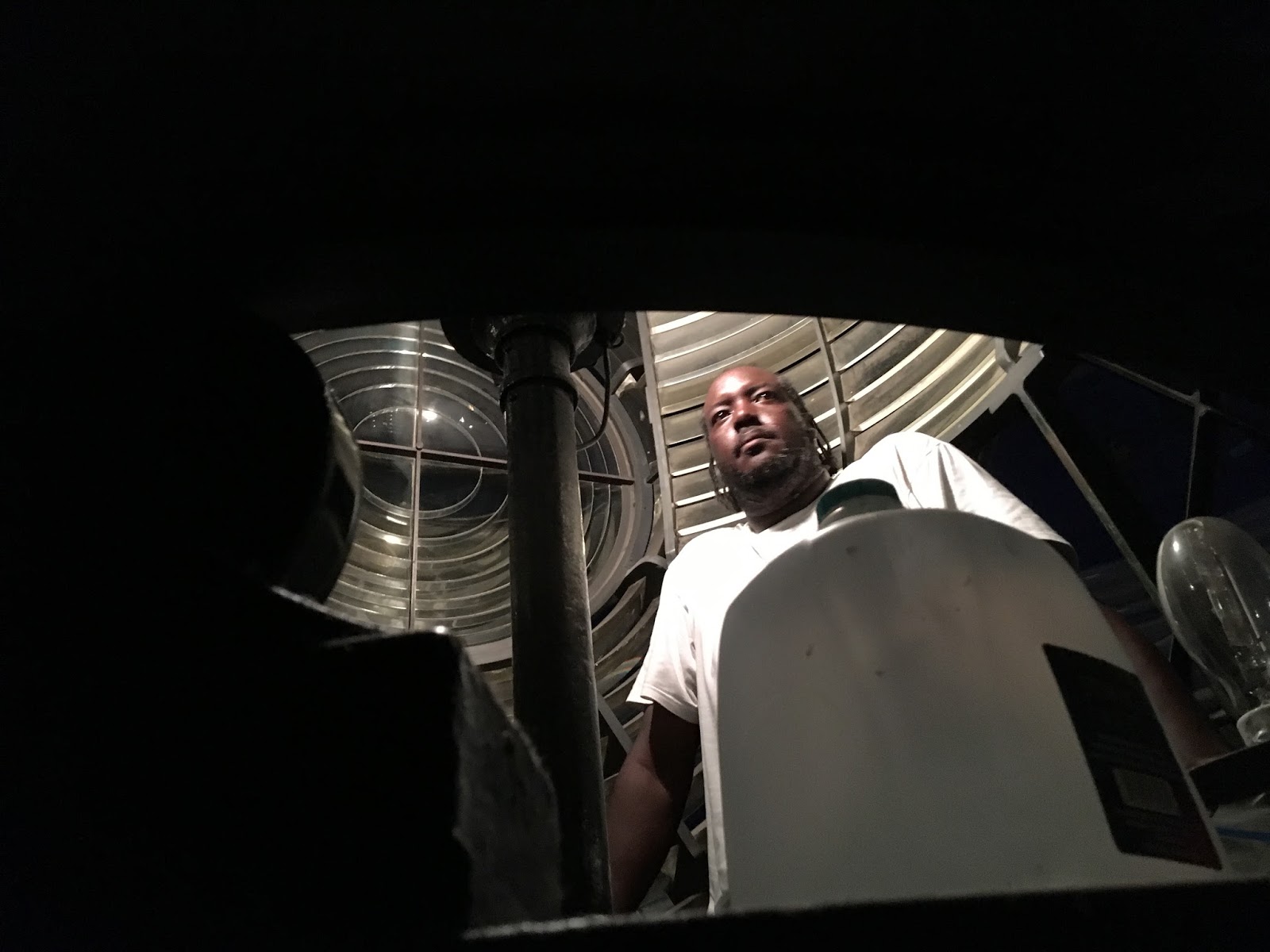
Waiting for the light keeper to show up to light up the lamp.
It's a manual lighthouse, requiring hand lighting every night.

climbing up the lighthouse to watch the lighting


Jeffrey, one of the keepers.


Harbour's Edge restaurant, a great spot in the harbor


post-dinner beach walk


Bingo at Jack's. Always fun. Alas, we weren't winners.


But these kids. They are such homebodies. It's like pulling teeth to get them off the boat. And they're not sitting in a/c with a TV. At anchor we don't have TV or internet and we don't own a tablet. They're screen-free and a/c free, completely self-entertained and they still won't leave the boat! Drawing, writing books, playing with figurines, playing a huge variety of make-believe games, swimming off the boat. It certainly makes for relaxing days but I do go a little stir-crazy.

We found an old printer up for grabs outside a realtor's office so we took it home for some tinkering.

Systems
Living at anchor is life on an off-the-grid floating home. If you do it right, you can stock up on food, catch fish, and be at sea (or anchor) for months. We have a bank of batteries (think car/tractor/RV size batteries) powered by a 150 watt solar panel mounted on our T-top (the roof over the back deck). Our batteries weren't charging very well so Hans investigated and one had very low voltage and was sucking power from the other two batteries, causing all batteries to have low voltage. He pulled that battery so we're down to two batteries. Our main power draw if the fridge and calling it "inefficient" is generous. We also have fans, lights, a fresh water pump (to pull the water from our water tank out  the faucets), bilge pumps, and toilet pumps. (There's a lot of plumbing on boats!) We find that we can go three days maximum at anchor before needing a power boost, either by running the engines or pulling into a marina and plugging in. We could always have more power (more solar) and more batteries, but for short-term cruising, we make it work.

We carry approximately 100 gallons of water which lasts us for 5-7 days if we are conscientious about our usage without feeling like dirty, salty sailors. We use the water to have quick freshwater rinses after swimming, we wash our dishes, we hydrate ourselves, wash hands, etc. We've all had some unpleasant GI upsets recently so we've decided to buy drinking water for our last couple weeks.

For long-term cruising we'll have 'UGE power and a 'UGE battery bank.

Monday, August 14, 2017

Living the vacation life

July 18, 2017
Green Turtle Cay


No exercise; attached to land not water; a/c; comfort; restaurants. Fun. But different.

We pulled into Green Turtle Cay and tied up at Bluff House Marina. Our water tanks were empty, the fridge was near empty, and the lockers only had flour, pasta, and a couple cans of beans. After over a week in the out islands, it was time to re-enter civilization, at least for a day or two.

A day or two turned into three as we enjoyed the comforts of being at the marina. A/c, TV for the kids (=babysitter for the parents), restaurants, golf cart rental, water, water water (at .30 cents/gallon). Marina life in the Bahamas is easy living, at a price of course.

north end of Green Turtle


"Almost as fun as the fair!"

The golf cart rides were so much fun - and so different from our previous cruising life. We toured the whole island via golf cart which was fast, fun, and easy, as opposed to 10 years ago when we dinghies, hitchhiked, or relied on other cruisers' rental cars and generosity. We went to town and to the north end - the girls screaming and giggling the whole way. We stopped at the dump to show the girls what happens to trash, why we recycle, and we we try not to consume so much.


We ate out, a lot. Almost every meal. When we left Manjack we were down to huevos rancheros and jam sandwiches. We were ready for some variety! The restaurants at Green Turtle were very good, especially considering the limited food options and lack of foodie culture. We always opted for "fresh catch" and it was never overcooked. Conch fritters never disappoint, but also never live up to the ones we made at Walker's Cay.
Princess spotting in the settlement.
fresh conch salad

We restocked our lockers from the few small grocery stores in town; we found souvenirs at a little gift shop; we had a Goombay Smash at Miss Bee's - reputed to be the home of the original Goombay Smash. We played tourist and, after two weeks of living the barebones cruising lifestyle, it was fun.


attracting the nurse sharks at the marina.

After three days, I was ready to leave. Living the marina life, we found ourselves connected to land instead of water. When we wanted to go somewhere we hopped in the golf cart instead of the dinghy. If we were hot we swam in the pool or sat in the a/c instead of jumping off the side of the boat into the clear Bahamian waters. Life on the hook is filled with exercise - swimming, hiking, paddling, sweating. Very different from the easy marina life.

Day 1 of a GI bug that plagued me for the entire trip.
I fell asleep and Matilda took care of me while I was sleeping. Sweet girl.
TV TV TV!!

Wednesday, August 2, 2017

Boating friends

July 18, 2017
Manjack Cay

happily reunited after many months
 We arrived at Manjack Cay around lunchtime to meet up with "Peter Rabbit" on s/v Grace. We'd been dock neighbors in Jacksonville and he and the girls are great friends. We like him too. But the girls...they're in love. [Long story: every morning we had to leave for school five minutes early so we could stop by Peter Rabbit's boat. Matilda would race down the dock and yell, "Oh Peter Rabbit, hey Peter Rabbit." He'd come out, play tickle ninja with Freja and listen to Matilda while she yelled at him for everything he'd done wrong. Then he'd walk us up to the van or bike trailer, chasing the girls the whole way to get them moving faster. Every kid needs an adult friend who isn't afraid to play like a kid; and every parent needs an adult friend that will play with their kids. It's awesome.] Short story: Peter Rabbit has a "bag of fun" on his boat. That explains his relationship with the girls in a nutshell. Best item so far: sparkly gold nail polish.

So anyway, we arrive at Maniac and immediately start hanging out with Peter and his 81 year old Dad. Matilda was (surprisingly) shy, so she stayed home with me while Hans, Freja, and Peter went snorkeling. We met back at his boat for dinner - hog fish and mashed potatoes. The next day Hans and Peter went spearfishing in the morning; the girls and I pumped up our inflatable kayak (a present from other marina neighbors in Jax) and we paddled to the closest beach. It was our first try with the kayak and it was very successful. I sat in the seat and had one kid on the bow and the other on the stern. We paddled around and saw baby sea turtles. Also a big stingray and I found tons of milk conch. Back to the boat for lunch and a siesta.

Life at anchor. The girls created a fort out of sun blocking material,
while Hans looks at the chart to find a good fishing spot.
happy kids, Freja making a bracelet and Matilda writing a book.

Hans went fishing and came back a mere 20 minutes later with a dinghy that was taking on water through a crack in the floor. He took it ashore for an epoxy workshop. Peter came by around 4 to take us for a hike to the beach to look for "magic fairy wands." This is the kind of thing he does. This is why our kids love him so much.

It was a long hike for short legs and buggy, but the girls were real troopers. Freja stayed with Peter and Matilda stuck with me and pretended to be Catboy, one of her favorite characters. He has speed. It worked. She is usually a distracted, dawdling walker, but not with Catboy speed. (Thank goodness.) The bugs were intense, but I loved the twisty trail that wound through a private homestead, a gravel road, some mangroves, and finally the beach.

Manjack has a few private homes, notably the house and land closest to the anchorage owned by a couple that has created a self-sufficient homestead. Hydroponics, fruit trees, chickens, and a gorgeous house with  wrap around porch overlooking the harbor. The owners cut the trail to the beach. The beach. Three miles of wild, undeveloped, windswept beach backed by casuarina pines, sand dunes, and a few palm trees here and there. Crystal clear water and white sand.

We (expectedly) ran out of fresh water on the boat that evening so we knew we had to leave the next day for Green Turtle Cay, only a few miles away.

Friday, July 28, 2017

2007 v 2017

A few differences
July 4 and July 14, 2017 (combined journal entries)
West End and en route between Allens-Pensacola and Maniack Cays


cooking dinner on the beach, fresh hog fish that Hans speared that afternoon.


homemade Bingo. Practicing for Cap'n Jacks in Hope Town

Trying to get the kids to do chores.
It's like pulling teeth and the amount of whining is insane.


My mom asked me the other day how this trip is different from life on s/v Whisper. Is it ever! It’s like comparing apples and oranges. Rather, it’s like comparing kale and chocolate ice cream. That’s to be expected though.

Not  only is it a comparison of powerboat versus sailboat, it’s a comparison of limited time v. endless time and life with kids v. pre-kid life. The differences go on and on. There are some elements of life on Whisper that I yearn for, whereas there are times now that I’m more relaxed and filled with more joy and content happiness than I was on Whisper.

Life on Whisper was alternately stressful and pure bliss. It was a hedonistic life where our only goal was to find fun and have fun. We sailed from one beautiful island to the next - drinking rum, hitchhiking, snorkeling, diving for lobster, napping, cooking, and reading books. These lazy, gluttonous, carefree days were punctuated by intense stress. We were new boaters and had a lot to learn. Sailing was easy; it was all the other seamanship skills that were hard. Navigation, weather watching, choosing safe anchorages, maintaining the boat - these are not all intuitive and we learned as we went. This naturally lead to disagreements since Hans and I both have the tendency to believe that we are right. We learned to trust each other, to let go, and to work together. We learned which decisions are worth arguing over and which are better to let go.

All this learning - both the nuts and bolts of boating and how to work together - has come to the forefront now. Boating with kids is a whole new ballgame. Thank goodness we’re at a competent level with our boating skills. We don’t need to overthink anchoring, navigation, or weather. One of us makes a decision and the other one trusts that decision. If something breaks, Hans (almost always) knows how to fix it. The stress that can come from the concrete skills of boating is minimal (not that we’re experts, far from it), which is good, because the kids provide enough stress to keep us busy. Stock up on ice because sundowners are a necessity.

It’s not just us anymore - we have two small humans onboard that we need to keep safe and healthy - and if they’re happy, that’s an added bonus.

In a more general perspective, the major difference between cruising in 2007 and 2017 is technology - specifically telecommunications.

Back in 2007 we more or less threw our cellphones (flip phones) overboard as we crossed the Gulf Stream. The only way to reach us was via email and the only time we checked email was when we took our computer ashore and found a wifi connection, normally at a bar. Our parents were a little concerned that every time we chatted on Skype we were calling from a bar. We were always at the bar? Always at a bar with a cold beer in hand.

We received our weather reports on our SSB (single sideband) radio - a dinosaur of metal and plastic that could tune in radio stations from all over. We could dial in Chris Parker, sailors’ favorite weather router, or chat with a HAM operator who was living in an underground bunker in Minnesota. (We didn’t, but we could.)

We connected our SSB to our computer with an auto line and downloaded weather faxes from NOAA. When I say downloaded, remember it wasn’t with an internet connection, it was through radio signals on the SSB. Very old school. Our favorite was a map of our forecast region that showed current weather trends - troughs, highs, and low pressure systems. We combined that information with Chris Parker’s daily report and local information to get the general weather gist. It was a great system, albeit labor intensive, and we always felt confident about our weather reports.


Weather forecasting has gotten slightly easier in 2017. Grab my phone, open up NOAA’s marine forecast and, after a minute or so (it’s only a 2G connection, already included in our Sprint monthly plan and available over the Bahamas cell towers), voila! There’s our weather report. For better or worse, we’ve had an internet connection the entire way through the Abacos. Search the horizon for a Batelco tower - one of the only distinguishable landmarks of most of the low lying islands - and do a quick check of the phone. It really can’t be easier. Not to mention the weather is the same very day. It is summer after all!

SaveSave

Monday, July 24, 2017

Six year old questions


Questions kids ask Freja about living on a boat, and her answers

Q. Where do you sleep? Where is everything?!!
A. It's like a house but floating on the water. I sleep at the front of the boat, inside.

Q. How does it not sink if it has holes on the side?
A. Because the holes are too far up.

Q. What is it made out of so it can float?
A. Well, I'm not exactly sure, but it's definitely made out of something that can float. I think it's made out of fiberglass.

Q. Do you have a TV and how does it work if its not plugged in to the electrical wire in the sky?
A. I do have a TV and we use it because we have little things that hold all our TV power and we plug it into our boat so it can work. But it doesn't work right now because when you're unplugged from the dock you can't watch TV.

Translation for that last one? The best I can guess is the electrical wire in the sky is satellites and internet. No idea what the "little things that hold all our TV power" are. Our solar panel maybe?