Thursday, October 30, 2014

Don't organize, just purge!

Choosing a life afloat means choosing to live with less stuff. We just don't have the space. Minimizing, purging, reducing, and downsizing are all becoming popular. This article from the New York Times bounced around on my Facebook feed for a couple days. Marie Kondo, a Japanese home organization expert, encourages people to clean out the clutter in their lives by examining each item they own by asking themselves: "Discard everything that does not spark joy, and do not buy organizing equipment."

This made me laugh. I sometimes find myself on an organizing kick: surely there must be some boxes or baskets or shelves that could contain this mess? And then I scroll around on Pinterest for hours looking for the right kind of catch-all for that space. I may buy a basket or two, or reconfigure a cardboard box for the space, but, more often than not, I realize my main problem: too much stuff. Overstuffed bookshelves don't elicit the same kind of relaxed feeling in me as, say, an overstuffed chair does. Instead of buying bookends and creating dividers to contain the stuff, I simply get rid of some of the things.

This is the one space on the boat that we "organized."
 It used to be a bench, but only a 3 foot clearance to the "ceiling," it would only work for kids.
We took the bench out and built shelves.
Bottom left: art supplies. I constantly clean and assess, otherwise it quickly overflows.
Middle: baking goods. I recently went through all my baking supplies and now only have what I really use.
Far right: cookbooks and alcohol. Ahem. Someone needs to purge the cookbooks and I can't do it.

The bookshelf in the main cabin. This is what it looks like everyday. I didn't spruce it up for the photo! It's nice to have a clear space where the girls can spread out books, add toys, and use for a play space. And it also looks so much nicer than a shelf crammed full of books. (Like it used to be.)

Parents of young children are also embracing this emerging trend in minimalism. Less toys =  less stuff to pick up and put away at the end of the day. Less toys = kids will actually use the toys they have. Better yet, less toys =  greater chance for imaginative play. Freja spent hours yesterday creating and playing with her farm, which was the inside of a cardboard box that she had decorated with stickers and markers. Matilda, meanwhile, played on the back deck in the baby bathtub, pouring water in and out of containers.

I feel like I'm moving more and more towards a barren aesthetic - no knick knacks, empty shelves, clear counters - because my mind can rest when my eyes can rest on a clear, clean space.

And the one clear counter on the boat. This space is always clear; my visual sanity. A quiet place to rest my eyes.

Thursday, October 23, 2014

Raising boat kids

The view out our back door.

These are some of the responses I get when I tell people we live on our boat with two little kids:

"How do you do it?"
"You're such a trooper."
"You're a saint."
"You live on a...?"
"Fascinating!"
"So...where does everyone sleep?"
"What do you do about toys?"

It is so hard to explain that my life is not much different from a landlubber's life. I have the words. I have 101 different ways to say that my life is similar to any stay-at-home-mom's, but it's hard to explain it. I say things like:

"It's like living in micro."
"We basically live in a small apartment, that floats."
"We have two bedrooms, two bathrooms, a kitchen, a dining room, a living room, and a back deck."
"It's no harder than living in a third floor walk-up in the city."
"You should see the pool."
"We have less stuff. We go outdoors a lot."
"The girls are little, they don't need big spaces."

Small girls play in small spaces.
This is the "kid space" - a corner of the main cabin that is designated as "kid only."
An impromptu reading nook, about 2 feet x 2 feet. Perfect for 2 small girls.

But even when people come over to the boat and see the space and the layout for themselves, they still shake their heads and say: "I don't know how you do it. I know that I never could."

Since I'm living out of the mainstream, I rarely walk into the mainstream - into someone's house or apartment - and shake my head and say: "I don't know how you do it. I know that I never could." (Which, don't get me wrong, is a totally understandable and fine thing to say. I absolutely don't take offense at all.) But what I want to say when I'm in a house is:

"Oh my word. There is a lot of stuff to clean."
"Wow. We'll have to buy a lot of furniture if we ever move ashore."
"What is in all these cabinets in the galley-I mean, kitchen?!"
"How long does it take to clean the whole house?" (Seriously, the idea of cleaning a whole house is daunting.)
"A full-size washer and dryer, steps away from the bedroom?!"
"How exactly do you start up a lawnmower?"

I drool over the counter space and the dishwasher. I love putting one girl down for a nap and not having to keep everyone else quiet so as not to wake her. I love watching the girls run around like crazy.

Living in a boat at a marina is a lot like living in a third story condo without an elevator. We have to schlep groceries from the car, down the dock, and up into the boat. I have to heave the stroller onto the boat. We have a great back deck, awesome views, and the option of going on vacation without packing a bag. We have all the amenities of living in a community with none of the work: trash, recycling, water, pool, clubhouse, barbecue areas. 

Four people living on a 36' boat. The girls have their own beds that no one else can go in without their permission; Hans and I work to give each other time and space alone. But, it's true. We are on top of each other, a lot. Sleep is difficult; it seems like someone is always waking someone else up. The girls fight over their toys, Hans never has a minute at home alone because we're always here, Matilda always seems to get her hands on things like markers and sunglasses and phones no matter how hard we try to keep that stuff away from her, the shower is tiny and only useful when I can't make it up to the marina, I wish the girls had bigger toys like a train set and an easel, I would love space in the galley to store a deep fryer and a food processor and a juicer. The small space means we have challenges and we have wants. But, overall, small isn't a bad thing. I embrace small.

Small space means: 
  • less stuff
  • less clutter
  • less things to buy (we have no room for throw pillows, decorative vases, end tables, or knick knacks)
  • more time outdoors (it's easy to get bored in a small space. The great outdoors is our living room.)
  • lots of emphasis on non-toy activities for the girls: art, music, dress-up, and imaginary play like cooking are big hits
We're outdoors, a lot. Hanging out by the inlet, watching boats.
You know, because we don't get enough of that at home.
We have challenges, yes. But I'll venture a guess that living in a big, or even medium-sized house has its own, different set of challenges.

Good living.

Wednesday, September 17, 2014

5 ways to relax without plugging in


 Let's play word association: relax

What do I get?
  • beach
  • birds singing
  • eyes closed
  • lying down
  • calm muscles
  • fresh air
But the reality? When I have a minute two relax, I plug in. I flip open my computer, I check my phone, I turn on the TV. It has become part of our culture to relax by zoning out in front of the TV or some other screen. Except that's not really relaxing. Sure, it's easy and entertaining and requires little thought, but those flashing images actually make us more hyper than we were before we turned the TV on. We don't even pay for cable but I can always find an episode of Law & Order to watch. And then of course I have trouble falling asleep and tend to have stressful dreams. Like I said, not relaxing.

Yet night after night I still mess around on the computer and then watch some TV before bed. Why? Because it's easy. It's hard to really relax. I recently went to the beach by myself and, instead of meditating while watching the waves or getting engrossed in a page-turning book, I found my mind racing. I couldn't relax.

Obviously I need a little more practice at the art of relaxation. Here are five ways to relax without staring at a screen. (The key here: practice. You can't meditate once a week and expect to reach zen or whatever calm state you're hoping for. Practice again and again. Learn to be comfortable with your body and mind at rest.)

1. Meditate. I'm no expert but it's easy to find a local class or guidance online. Here is some basic info from the Mayo Clinic.

2. Read a book. It doesn't need to be high brow literary fiction. Anything in print that can take you away from your daily concerns will work.

3. Cook. Or choose another activity that you like doing if cooking feels like a chore. Get engrossed, get involved, lose yourself in the activity. Get in a state of flow.

Surely I can so something in the kitchen with this massive squash!

4. Exercise. Whatever works. High intensity with some house music or solo yoga on a beach. Again, get in your flow.

5. Play. Do something fun! Go fly a kite. Kick a soccer ball. Take a picnic to the park. Get outside with friends and family and pretend you're a kid. Have fun!

Bonfire on the beach with friends. Definitely fun!

Wednesday, August 27, 2014

Dreaming


Dreaming of distant horizons
When I was nearing college graduation, a number of friends were joining the Peace Corps or heading off to do a year of Fulbright Research. I took a job at a law firm. And, right now, as we have no plans to be going anywhere exotic for the next 3-7 years, the Peace Corps is looking pretty good. Except for the minor details of a husband and kids. Family Peace Corps?

I took a personality quiz* the other day. You know the kind that boil you down to a few letters: IPFJ or JPNE. Me? ENFP. Which means:

Extraversion
Intuition
Feeling
Perception

I told Hans that I’m an ENFP: 

“So I’m an ENFP. That means I’m and extroverted dreamer. I love social events and being with other people, but I also love getting to know someone and their emotions. Also, I don’t hide my emotions and I’m easily excited.” (Yeah. I don’t have a poker face.)

He almost spit out his beer, gathered his composure and said: 

“Well, I’d say that’s not all exactly wrong.”

[A little Swedish cultural lesson here: If a Swede likes a meal, especially a northern Swede, like Hans, they say something like: “I’ll be able to keep it down.” Or, “It’s not that bad.”]

The positive aspects of an ENFP: I’m a dreamer, an idealist, and a free spirit. I’ll take them.

I do spend a lot of time dreaming. I’m currently reading two books at once, not something I like to do but I can’t put either one down. The first is the account of a family’s sailing trip around the Bahamas and Caribbean and their travels in South America. The second is about a scientific expedition in Antarctica where the team purposely froze their boat into the ice and used the boat as their base to conduct research on penguins and ice floes in Antarctica in the winter. 

I can definitively say that I will not be sailing to Antarctica. I will, however, be sailing in the Bahamas again, hopefully soon.

My happy place: sailing in the crystal clear water of the Bahamas.
We’re at the dock for the next three years while Hans does his residency. He gets a few weeks of vacation each year and I’m already planning 10 weeks of vacation for the 3 that he actually is allotted. But I’m not content to dream about the vacation weeks. I’m dreaming about our future lifestyle. According to my test results, “ENFPs are fiercely independent, and much more than stability and security, they crave creativity and freedom.” Yes.

My free spirit is taking over my thoughts. Where will it take us? What adventures will we embark on? Will we circumnavigate? Hop from campground to campground in eastern Europe? Rent an apartment in a South American city for six months? 

Quito, Ecuador. Amazing geography, a beautiful historic city, and friendly people.
Add caption

I realize that I will only ever dream about expeditioning. It is doubtful that I will go on an adventure that will be physically demanding or uncomfortable. It’s not that I need or want the Ritz Carlton, but I’m more interested in people and culture than summiting the highest peaks or sailing to the most remote anchorages. 

So, nearly 15 years after college graduation, I realize that maybe I should have joined the Peace Corps after all. It certainly would fit my personality type. Seriously. Is there a Family Peace Corps?

*You can take the same quiz here. 

Friday, August 22, 2014

Think!

The daily life of a stay at home mom (SAHM) isn't all play dates at Starbucks and a long nap in the afternoon. Sure, those do happen, but more often than not I'm either cleaning, quelling temper tantrums, or rolling out playdough snakes. It's busy, and it's boring. Yes, boring.

We play games like "ring around the rosie" and sorting shells from little animals. We color with crayons and stickers are a hot commodity. 20 and 24 piece puzzles are the new challenge.

We make music,

we paint,

we wear shorts on our heads,

we have conference calls with our Aunt Angie,

and we eat. It's an action-packed life.

Sometimes I don't have time to play because I have work to do. Dishes to wash, toilets to clean, laundry to fold and put away. Sheets need to be changed. What are we having for dinner tonight?

My days are full. They're jam-packed. But I get bored. What is lacking? My job isn't what you'd call "intellectually stimulating." It's challenging, frustrating, demanding, exhausting, labor-intensive, fun, and demands an insane amount of multi-tasking, but it doesn't engage the critical thinking portion of my brain.

For awhile I thought that what I was missing was the end result you get from a professional job. I thought I needed to produce something. Something tangible, something bigger than me, something beyond the preschool crowd. I pumped a lot of energy into writing a nonfiction memoir about our sailing trip in the Caribbean.

I loved writing the book, but I loved the process more than the end result. The process: critical and analytical thinking. The kind you get when you work in a professional atmosphere where you have to write reports, organize a team, or do research. Teamwork, the back and forth exchange of ideas, compromising, expanding. Recognizing a problem or a need and tackling it to its solution. I miss the give and take and the thinking that takes place at work.

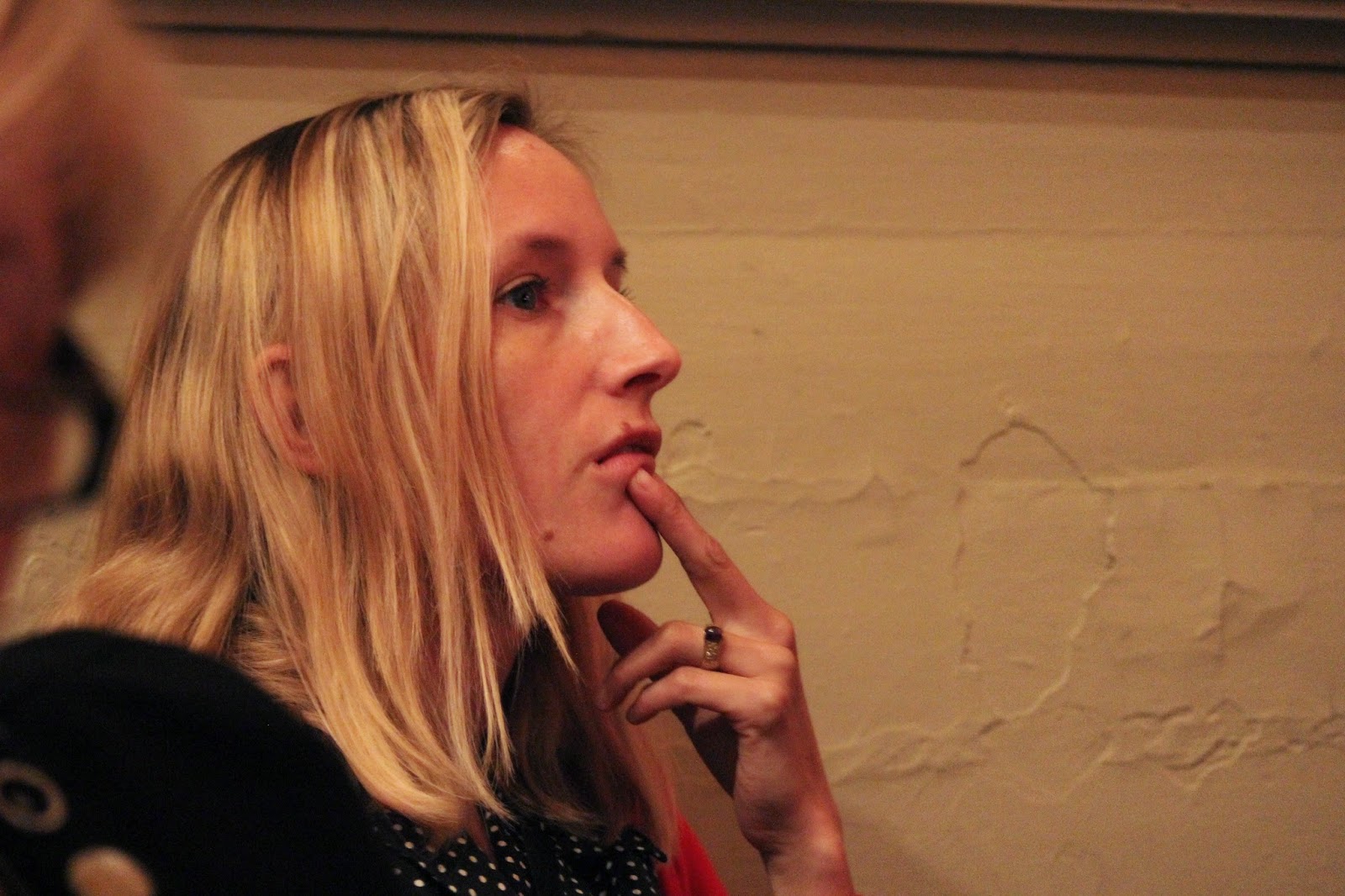
This, apparently, is my "thinking" look.
Listening to the commencement speaker at Hans's graduation, May 2014.
I don't, however, miss work. I love staying home with my girls. I don't want to change that, but I do need to expand my daily horizons so I'm feeling more personally challenged. How?

  • I listen to the radio, a lot. I love news and politics so I keep abreast of what's going on in the world and in my neighborhood.
  • I'm writing every day. Writing is a great way for me to organize my thoughts and expand my thoughts. Like talking with a good friend, the more I write, the more I learn about myself.
  • I'm trying to write better. I'm taking my time with blog entries and I'm thinking of each one as an article as opposed to a personal journal. Complete sentences, big words (!), humor (at least I try).
  • I'm reading non-fiction books. What are other people doing? How can I be inspired? 
  • I'm brainstorming ways to get involved in my community through volunteer work or a part-time job.
It's so easy to get stuck in the rut of cooking, feeding, cleaning, playing, cooking, feeding, huh? What day of the week is it? I don't want to end each day feeling drained. I need to refill my own pot and, as much as I love Facebook and Pinterest, it's going to take a lot more than surfing the web to keep me inspired, engaged and fulfilled.

Sunday, August 17, 2014

Being frugal

Sometimes I feel like I'm still in college. I still shop at thrift stores. I still eat rice and beans. I still seek out coupons for half-price haircuts.

I was frugal in college because I didn't have very much spending money. Post-college, Hans and I drove across country with $500 in our bank account and a case of box mac & cheese in the back seat. I remember precisely the three times we ate out in six weeks of traveling. My frugality continued when we moved to Washington, DC and started to actively save for our sailing trip. Yes, there were rules: One meal out once a month. Weekly allowance of $20 per person. All furniture must be found or gifted.

Life was good when we were cruising because, well, we were in our twenties and we were sailing around the Caribbean. Our expenses were minimal so we could live high on the hog. (Translation: we could treat ourselves to a burger for lunch every now and then. Of course we never skimped on the beach bars.)

Living the good life at the Soggy Dollar Bar on Jost Van Dyke, BVI
Moving to Philadelphia and starting medical school put the brakes on spending, big time. We were back to our college budget in an expensive city. Back to the thrift stores, back to budgeting, back to frugality.

But it's easy to be frugal when you live on a boat. Our expenses are low, our rent is low. We can't buy much stuff because we have nowhere to put it. Our vice is eating out. We love to eat out. Luckily for us, but not our bank account, Freja loves to eat out too. Bubbla vatten (club soda) and french fries. Oh yeah!

Baby Freja at a waterfront restaurant in Sarasota, FL,
patiently waiting for her club soda and french fries.

Besides eating out, we manage to live comfortably without shelling out a lot of cash. What does living frugally look like on a boat? Probably not that different from living frugally on land.

Phones. Hans has an iPhone because he needs it for work. I am home a lot so I get my internet fix on my computer while the girls are sleeping (via free wifi from the marina). I have no need for a smartphone so make do with a "burner." A tiny little phone that makes texting difficult but works fine as simply a phone and has cheap monthly bill.

Clothes. Hans chose a profession that allows him to wear pajamas to work. Not literally pajamas, but have you ever worn a pair of scrubs? Pretty comfy. How convenient that I, too, have chosen a profession that allows me to wear pajamas to work. "Mamma, can I wear my pajamas all day today?" "Yeah, sure. Why not?" ('Cause that's what I'll be wearing.)

no shirt and tie needed!
Car. Hans drives our car to work, a 2003 Volvo S60 that we bought 4 years ago for $6k and still runs beautifully. I tow the girls around in a bike trailer that cost $125 used and has no insurance premiums or maintenance costs.

our car, buried in snow in VT
Furniture. Add ten points in the liveaboard lifestyle: all furniture except the couch is built-in. We just purchased a new mattress for our bed, replacing the original which is 25 years old. $200.

Toys. Another ten points for living aboard: the girls have very few toys (no space). I am tempted to buy them new toys all the time. There is always something new they would love, but we have no space. Freja and I rotate the toys every week or so which keeps it interesting for them and the stuff in our main cabin sort of under control. A (relatively) large cubby hole by the galley table is dedicated to art supplies.

What do the girls do instead of playing with the latest and greatest toy? Art, crayons, stickers, playdough. And we go outside. A lot.

A homemade pirate. No need to buy a store-made costume. Add some face paint and a scarf, thrift store vest and, voila!
"Arrrgh matey!"
Bathroom sundries. Even though Hans is a doctor, our first aid kit and supplies are relegated to two small tupperware boxes, smaller than shoeboxes. One for the girls, one for us. I don't wear a lot of makeup or jewelry; Hans is a toothbrush/paste and deodorant kind of guy. We share the same shampoo and don't buy OTC medications for each ache and pain and cough. Ibuprofen works!

Food. I try to make menus for a few days in a row, finding that if I stick to a menu then we eat the food I buy and I buy less. For the environment and for our health, with a trickle-down affect on our bank account, I try to alternate meat days with vegetarian days. Of course, we are such suckers for eating out. We love to eat out. So I may not have fancy clothes or fine jewelry, but we certainly support the local food economy!

On the other hand, living on a boat, being a boat owner, also can be pricey. Let's not forget our starboard engine that needs a rebuild that will cost anywhere from $3 to $5k. Or the new fridge we had to buy that cost $1300. Or the new air conditioner that recently set us back another $1300. Silicone, duct tape, electrical fittings, new tools to replace the ones that fell in the bilge or in the drink: these are all maintenance costs that add up quickly on a boat. Homeowners are familiar with these types of numbers, I'm sure. But when a pipe springs a leak on a boat, or when a bilge pump stops working on a boat, it has to be fixed immediately. Our home could sink! Procrastinating maintenance, repairs, and the associated equipment isn't an option on a boat.

If something's broken, we've got to fix it. DIY as much as possible.
I live frugally out of necessity (income and space limitations), but since it's been part of my lifestyle for so long, it isn't hard and I don't really think about it. Of course I do have a wish list of things I want: Toys for the girls, kitchen gadgets, shoes, clothes, books. But, then, where would I put it? And do I want the kind of lifestyle that makes space (both literal and figurative) for all that stuff? What would I be trading in to go from living small and minimally to having more creature comforts and luxuries?

Friday, August 15, 2014

Choosing a life afloat


Why do I liveaboard? Why do I choose to live on a boat that is 36’ long and 14’ wide with my husband and two small children? 

I can easily tell you why someone wouldn’t want to choose this life. The lack of space, lack of privacy, lack of a yard or garden, lack of appliances, lack of lack of lack of.

It's pretty small. Main cabin (living room) looking forward.

Galley.

Yes, our floating home is lacking a lot of comforts and stuff that has become standard in the modern world. But we make up for it ten-fold with the things we have that we wouldn’t necessarily get if we lived on land.

Economies. Economy of scale and and fiscal economy.

Our space is small so we only have exactly what we need. 

Shoes and clothes
I have a few pairs of shoes, each of which matches a number of different outfits and occasions. I wear my shoes until they wear out and then I carefully consider the replacement pair. The same goes for clothes. I rummage through the racks at thrift stores for higher quality brands in similar styles and complementary colors so I can mix and match. 

The galley (kitchen)
We have four pots and pans: a 9” cast iron skillet with high sides, a 9” cast iron pancake pan (pankakor pan), a 3 quart stainless steel pot, and a very small 1 quart pot. Plus a tea kettle. We have one wooden spoon, one spatula, one whisk, one cutting board, etc. The exception: we have quite a number of knives on a wall-mounted magnetic rack, because you can’t cook without good knives.

And it is possible to make amazing birthday cakes, like Freja's pankakor torte for her 3rd birthday.

Linens
We have one sheet set for the vee-berth bunks, one cotton and one flannel sheet set for our bed, one towel per person, a few hand towels, and many, many washcloths (to wipe little faces after meals).

I’ll stop inventorying our boat otherwise I’ll be tempted to stop writing and start filling some bags to bring to Goodwill. Of course I do have to mention the absolute lack of stuff  needed to raise kids on board. And this can only be considered a good thing. No crib. No big high chair. No changing table/dresser combo. And the lack of toys. Oh joy, the lack of toys!

Freja finding a cozy spot next to her tiny kitchen we found in Sweden.

And the kitchen strainer is always a fun toy.

No big bathtub but two tubs that can be brought out to play in on the back deck.

Matilda, summer 2014.
Wearing the exact same clothes and hat Freja was wearing during summer 2012.
Reduce, reuse, recycle.
My point is that we have exactly what we need and we aren’t trapped in the endless cycle of consumerism and waste. It is nice to buy shiny new things at the store, but, in the long run, shopping isn’t fulfilling and doesn’t make me happy in the same way as spending a day at the beach or eating a nice dinner does. 

Economy of scale directly translates to fiscal economy. It’s cheap to live on a boat. Not only do we not spend money on stuff, marina fees are much much lower than rent and things like parking, internet, laundry, trash, water, and a community pool are included in our monthly slip fee. We’ll gradually pay off our student loans and gradually work our way back to the kind of economic freedom we enjoyed when we were cruising in the Caribbean. 

In the meantime, a liveaboard life isn’t a static one. Even if we are living at the same marina for years, just by virtue of living on a floating home that has the ability to take us places (say from Philadelphia to Jacksonville!), we live with the possibility of the dream. Open horizons. Adventure. Sure, we’re not going anywhere anytime soon. We’re tied up with work and the care of two small children, but at least we can sit on our back deck with cold beers and dream about going somewhere, knowing that the dream can be a reality. We can chat with active cruisers and live vicariously through them. The proximity to the dream makes it seem more real.

dreaming of this ...

and this ...

and this.

This...

and this.


A boater’s proximity to nature is another compelling reason that keeps me living aboard. I know when it’s raining, I know when the temperature changes a couple degrees, I know when the sun rises and sets. I’m conscious of how much plastic and packaging I bring aboard and how much trash I make, because I have to bring it all off again. We wear clothes multiple times before washing because we have to haul everything up to the marina laundry. Alternatively, I do tons of small loads in our mini onboard washing machine. So the choice is daily laundry or hauling heavy bags to and fro. It’s easy to wear clothes 2, 3, or 4 times before washing. I use eco-friendly cleaners like vinegar because all of our gray water goes overboard. One-ply toilet paper because our septic system is sensitive. What am I lacking? Compost. Oh don’t get me wrong, I make a lot of compost, but sadly it all goes in the trash because I don’t have the space nor need for a compost bin.*

Hello beautiful sunset, Philadelphia, summer 2013.

And hello intense storm, near Savannah Georgia, summer 2014.

Of course, the main reason that I liveaboard is happenstance. We first moved aboard with the goal of cruising the Caribbean. We did that and when we moved back to the States we just never moved back onto land. This boat is my home. Why go anywhere else? I can wax poetic about the sunrises and the wildlife and the simple life, all of which make living aboard pleasant, but, the bottom line, when I’m on my boat, I’m home. I’m comfortable, I’m happy, I’m safe. I have what I need and what I want. (Again, see*.) Why live anywhere else?

Yet, yet … the majority of the world lives on land, so what kind of person has chosen this floating life? If you want to meet an oddball or two take a walk down the nearest dock. Liveaboards tend to be an eccentric breed. Liveaboards fit in all different boxes: young people, hippies, retirees, early retirees, families, religious missionaries, tax evaders, bachelors, part-time cruisers. You name it and you’ll probably find it. 

I think I’m a pretty run-of-the-mill, upper-middle class white American. What is it about my personality that makes me a successful liveaboard? I’m pretty low maintenance. Makeup? Eh. Clothes? Eh. Shoes? Eh. Fancy electronics? Eh. I love the internet but I see the value in unplugging. I’m a bit of a DIY-er, though I hate to do blue jobs. I get tremendous satisfaction from the self-sufficiency that living aboard demands. I like the simple life, but I also like to eat out. I like being on my own floating island, but I also need a large circle of friends and daily social interaction.

There is no specific personality that guarantees a successful liveboard, just a willingness to be different, learn, live with less, live simply, be open, and, perhaps most importantly, not be prone to seasickness.

*I wish I had the need for a compost bin. I love so many things about my life aboard; I’ve learned to live with so many idiosyncrasies about life aboard; I don’t sit around pining for such-and-such landlubbing amenity. Except a garden. I would LOVE to have a yard and a garden. Yes, I have seriously considered finding some undeveloped waterfront land where we can park the boat and grow veggies.